Välkommen till ett seminarium i serien SmallTalks [about Nanoscience] arrangerat av Styrkeområde Nano.
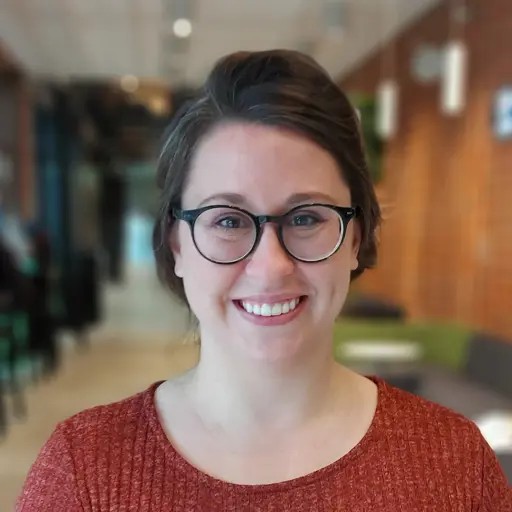
Talare: Loise Råberg, Doktorand, Kemisk biologi, Life Sciences
Fika serveras innan föreläsningen. Studenter är välkomna att delta!
Översikt
- Datum:Startar 9 March 2026, 15:00Slutar 9 March 2026, 16:00
- Plats:
- Språk:English
Abstract
Advances in nanotechnology is opening new innovative therapeutic strategies to combat diseases such as cancer, arthritis, and cardiovascular diseases at the molecular level. Nanotechnology allows us to design particles that interact with specific molecular features on cells. This precise targeting capability allows us to control and understand the biology driving diseases.
Taking advantage of nanoparticles’ ability to achieve multiple binding interactions with their target, we developed a polymer-based nanoparticle able to strongly bind a sugar called sialic acid (in a biomimetic approach). Sialic acids are naturally found on the surface of all cells and tissues and play an important role in maintaining healthy cell functions. They act as molecular ‘signs’ on cell surfaces, helping immune cells recognize where to move and how to respond. In chronic inflammatory disease, sialic acid patterns become altered, which can contribute to excessive immune cell infiltration and sustained inflammation.
In this work, we evaluated the ability of our designed nanoparticles to interact with cells and block sialic acid-mediated immune cell migration in chronic inflammatory conditions, thereby promoting resolution of inflammation. This approach provides a new innovative strategy to dampen excessive immune responses without broadly suppressing immunity. Beyond the therapeutic potential, this work also provides new insights into the role of sialic acid in immune cell behavior.
- Biträdande universitetslektor, Kemi och biokemi, Kemi och kemiteknik

- Biträdande universitetslektor, Kvantteknologi, Mikroteknologi och nanovetenskap