This interview was made in April 2020.
Meet Per Malmberg, senior researcher at the department for Chemistry and Chemical Engineering, associate professor of analytical chemistry and manager of the Chalmers part of the infrastructure Chemical imaging. His passion is to try to understand the chemistry in nature and especially the course of diseases.
What is your driving force as a researcher?
My passion has always been to try to understand the chemistry in nature. I am mainly interested in trying to understand the course of diseases such as inflammation, cancer and neurodegenerative diseases. I have done quite a lot of research on how metals in the brain are distributed in, for example, brain injuries, but also on how metals are absorbed into the lung in chronic obstructive pulmonary disease (COPD). And, as an analytical chemist, I also like to measure things. Preferably small things that are difficult or almost impossible to see.
What are you focusing on in your research?
My research is mainly focused on mass spectrometry, where I develop methods in imaging mass spectrometry. Imaging mass spectrometry involves chemical images of things by using mass spectrometric information to create distribution maps of a molecule in, for example, a cell or tissue section.
What do you think, is important to create a good research environment?
I always emphasize the importance of good colleagues and employees. Also, to have open conversations and exchange of ideas. That´s why, I think that interdisciplinary research usually leads to good results. A certain degree of humility towards other people’s opinions and skills, does not hurt either.
And a good working environment?
Excellent coffee!
You came to Chalmers in 2014. What did you do before that?
I worked at the Sahlgrenska Academy / University of Gothenburg, where I mainly focused on biomaterial-related research. In connection to the increasing need for expertise in surface analysis and mass spectrometry when Andrew Ewing started his bioanalytical center, I switched to Chalmers.
Since 2015, you have been working on what is now called the chemical imaging infrastructure. It is a collaboration between Chalmers, University of Gothenburg and AstraZeneca. What are you doing and what is your role in the infrastucture?
Earlier when this was a center and was called NCIMS, and in the beginning when we became official infrastructure, I was the sole manager. Today I mainly manage the Johannebergs-based part, although I am involved in the part that lies within AstraZeneca's Bioventure Hub. As an infrastructure, we offer access to several advanced imaging mass spectrometry instruments such as ToF-SIMS and MALDI. We can do analyzes of everything from polymers and paper to cells and drugs. You can read more in the related link to this page (editorial remark)
And what has the collaboration meant?
We have had a very good collaboration with AstraZeneca for several years and for example we have our NanoSIMS instrument placed in AstraZeneca's Bioventure Hub. Together we have developed NanoSIMS as a method that can be used during the development of new medicals. Today, medicals are aimed at being as specific as possible, for example, having an individual cell as a target which makes it important to have a detection method that can be used to see in which individual cell the medical falls into. With our NanoSIMS method we can determine within which part of the cell a drug falls and measure the concentration directly in place in the cell! This measurement technique has taken several years to develop and just recently we published our first joint work on the method in ACS Nano (Scientific journal, editorial remark).
And what is happening right now, do you want to tell us about any exciting tracks?
Right now, me and a student have been working to analyze how the cholesterol balance is disrupted in brain tumors. Cholesterol is quite difficult to measure with conventional techniques and the exciting ones is often causing artifacts and incorrect results. Our technology can do this without causing artifacts, and we can thus gain a unique understanding of how cholesterol is affected in cancer. We are especially interested in the cells of the brain that produce myelin, the protective layer that surrounds our nerves. This layer consists largely of cholesterol and we hope to understand what is failing in the cells' production of cholesterol when a tumor occurs. This can lead to possible treatment goals, of the tag, in the future.
Another interesting track I and a colleague from Sahlgrenska are working on, is finding a way to study the absorption of chemicals in the skin without using laboratory animals. Together we have developed a method that gives unmatched precision in the analysis of how a substance, such as a sunscreen, distributes in the skin. Instead of laboratory animals, we use human skin left after operations. Our goal is that this can lead to the fact that methods that currently use laboratory animals, for example in the EU's REACH program, can be completely replaced.
For more information;
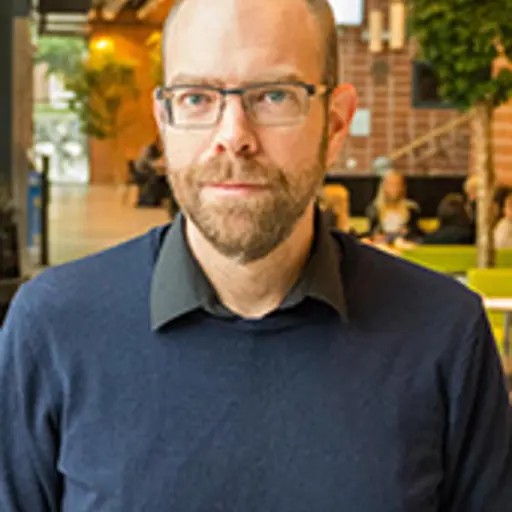
- Associate Professor, Chemistry and Biochemistry, Chemistry and Chemical Engineering