New tool to reveal the big picture in urban planning

Image 1 of 1
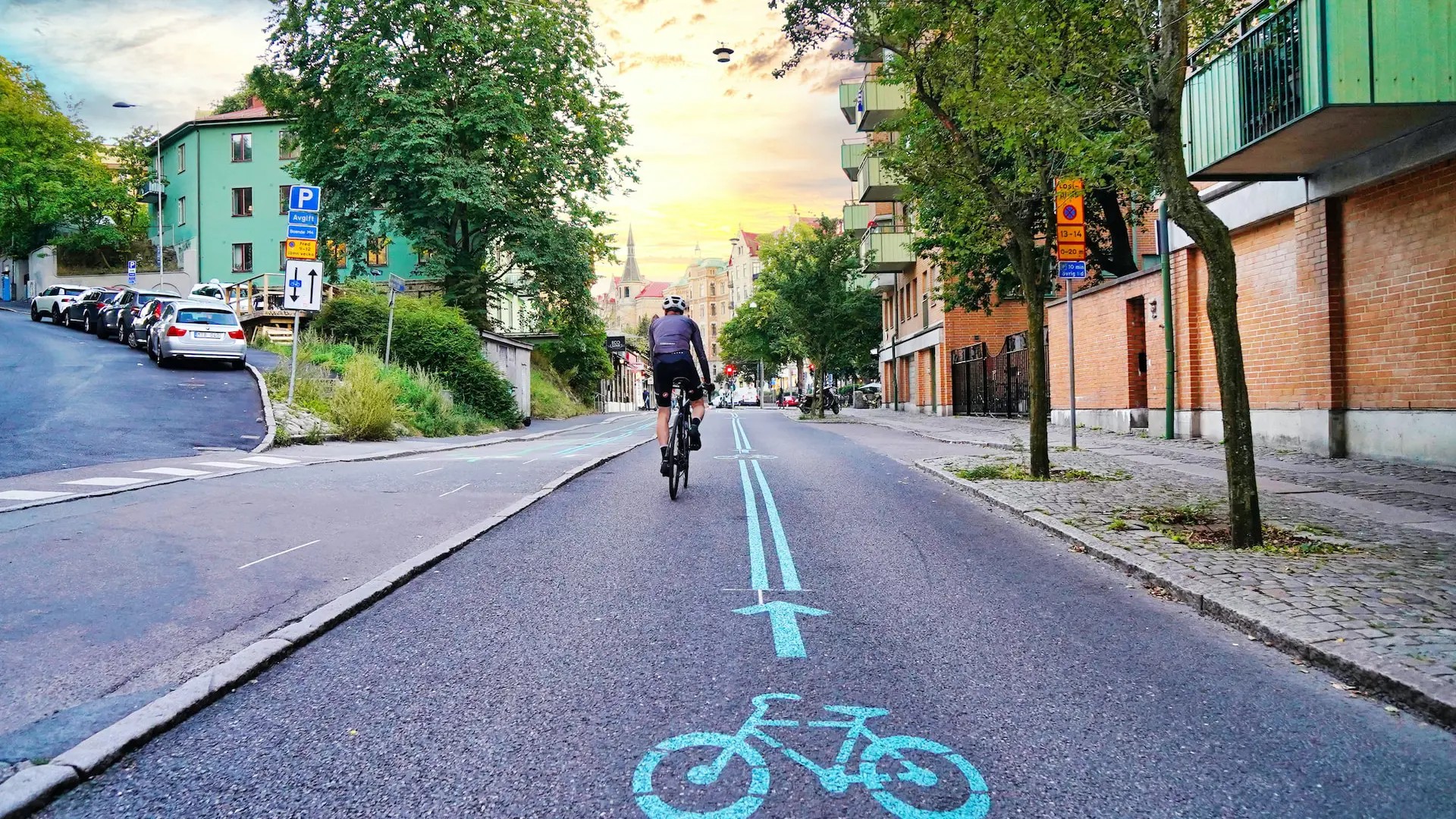
Bicycle lane in Gothenburg
The Smart Density Tool will support decision making in urban planning. Photo: Martin Magnemyr, Unsplash

Today's urban planners are faced with a complex task when different, and sometimes conflicting, aspects and needs need to be met in urban planning. A new tool can help make positive effects of densification visible, and at the same time provide an understanding of, and thus the opportunity to counteract, negative effects.

The Smart Density tool, developed by researchers at Chalmers, BTH and SLU, consists of an interactive database based on scientific articles on densification, made easily accessible to practitioners. The idea is that the tool shall provide decision support and advice when choosing measures.
 
– When studying research findings in relation to motivations in comprehensive urban plans of Swedish municipalities, we realized that practitioners are not always reached by the extensive research of the field. We have also realized that we can contribute to bridging that gap by making research more accessible, says Meta Berghauser Pont, docent in urban planning at the department of architecture and civil engineering at Chalmers.


To densify or not to densify

Through a collaboration with the municipality of Norrköping, the researchers received direct input from practitioners about their needs in terms of tools and knowledge and in what form it would be most useful. The conclusion was an interactive database. The Smart Density tool helps the user by showing all aspects of densification that need to be taken into account – in order to both benefit from the upsides of densification and to address any negative effects. The user receives both summarized information and concrete literature tips on related research.
 
 – That is the question all municipalities face when dealing with the consequences of urbanization - densify within the city's borders or expand the city with sparser solutions? Depending on which choice you make and how, there are different consequences. Our tool makes it clear what you gain and lose by making your choice, says Meta Berghauser Pont. 

The tool has been developed to be used by professionals in general and detailed planning and by others who work with community development issues, on a generalist as well as a specialist level. The researchers hope that the fact that different professional groups get the same opportunity to acquire more knowledge enables more nuanced discussions where goal conflicts can be made visible early on.

Guidance to counteract discrepancy

In the research project that preceded the current project, the researchers compared what previous studies had concluded regarding densification (in which 229 scientific articles were reviewed) with arguments used for densification in comprehensive urban plans of 59 Swedish municipalities, and they found discrepancies within certain themes. While the urban planners saw densification as something that produced mostly positive effects in relation to sustainable urban development, the scientific articles reviewed also showed negative effects linked to social sustainability and reduced biodiversity.
 
– Here we could see the tendency that planners already had a solution in mind, and then submitted evidence that spoke for that solution, rather than seeing the overall picture.
Meta believes that it is easier said than done to get an overall picture because of the veritable jungle of research results, and that it can be both difficult and time-consuming to find relevant literature for the question you have. And this is where the Smart Density Tool comes in.

To the Smart density tool

Background:
The project ”Smart Täthet. En webapplikation för att väga mellan täthetens konsekvenser” which lead up to the tool was funded by Formas and is a collaboration between Meta Berghauser Pont, Chalmers (coordinator), Per Haupt from Blekinge Institute of Technology and Per G Berg from Swedish University of Agricultural Sciences. Boverket and the Municipality of Norrköpings kommun have also been part of the project, which the latter one as the testing ground for the tool. The database of the tool has been built on a systematic literature review of 229 empirical studies, published in peer reviewed scientific magazines. 

Contact:
Meta Berghauser Pont
  • Full Professor, Urban Design and Planning, Architecture and Civil Engineering

Skribent

Catharina Björk