


A new digital learning resource aims to make mathematics education more accessible, including for children without access to teachers. The Akelius Math Learning Lab at Chalmers University of Technology and the University of Gothenburg has recently launched the first part of a large-scale open set of educational materials that can be used in places such as refugee camps.
Many children and young people around the world lack the opportunity to develop basic mathematical skills. This not only affects the opportunities available to these children, but also a country's technological and economic development.
The Akelius Math Learning Lab at Chalmers University of Technology and the University of Gothenburg was founded in 2024 with the purpose of increasing access to mathematics education. The lab is financed by the Akelius Foundation, a charitable foundation whose aims include supporting those in need through education.
The Akelius Math Learning Lab is currently developing freely available digital educational materials for use in refugee camps, schools with limited resources and other contexts where there is no access to teachers. The goal is to provide educational materials for children from the first year of primary school to the final year of upper secondary school, in several different languages.
The first part of these materials has now been published and was launched at the Mathematics Biennial in Gothenburg on 29–30 January 2026.
“We have now presented mathematics for grades 1 to 3 and algebra for secondary school in English. Together with UNICEF, we will now trial these materials in English-speaking schools in Lebanon,” says Samuel Bengmark, Professor at the Department of Mathematical Sciences and Director of the Akelius Math Learning Lab.
The materials are freely available online and consist of various activities that can be completed independently with the help of built-in guidance and feedback. In order for the resource to be used in places such as refugee camps, it also needs to be accessible without an internet connection, which will be made possible during the spring.
“We are developing an app that will work completely offline. This means that the app can be used in areas without internet access, such as learning centres in refugee camps, where children can work independently on tablets,” says Samuel Bengmark.
The educational materials must also be suitable for learners of different ages and from different cultures, which means that many factors need to be taken into account during the development process.
“Can you use a chocolate bar as an example? These are the kinds of questions we've been discussing, because the materials must consider different cultural aspects while also being realistic and simple enough in terms of cognition, graphics, and language,” says Samuel Bengmark.
Research and development in close collaboration
At the Akelius Math Learning Lab, developers and researchers work side by side. The developers are qualified teachers and are responsible for producing the educational materials, while the researchers study issues central to their development and use.
“This close collaboration between researchers and developers means we work in a unique environment where research is involved throughout the entire development process. This benefits both sides: the teachers can quickly access support for their work and build on research findings, while the researchers gain access to study environments and the opportunity to identify relevant research questions,” says Samuel Bengmark.
Although their roles are different, they all work towards the same clear goal: to make mathematics accessible to those who currently do not have the opportunity to receive tuition.
“There are schools around the world where teachers lack the resources to support all their pupils, while at the same time children are literally standing outside the classroom because the school is full. In places like that, I believe our resource could really make a difference,” says Samuel Bengmark.
The open educational materials could also be beneficial in Swedish schools, particularly in multilingual classrooms where teachers lack the necessary resources to support all students.
“Here, the resource could support teachers in differentiated classrooms,” says Samuel Bengmark.
The materials are currently being tested in a couple of Gothenburg schools in collaboration with Räddningsmissionen's Community Schools and the International School of the Gothenburg Region (ISGR).
“These collaborations are valuable to us because we can use the test results and feedback from the schools to improve the materials. For instance, we have found that providing less guidance between activities results in students doing less, but remembering more, which was somewhat unexpected. This has led to changes in our educational design,” says Samuel Bengmark.
During the spring, the first part of the materials will be translated into Arabic and Swedish, followed by nine additional languages later on. At the same time, work will continue on adding mathematics for the remaining grades, up to and including upper secondary school. The full set of materials is expected to be completed within two years.
More about the project
The Akelius Math Learning Lab is a collaboration between the Department of Mathematical Sciences at Chalmers University of Technology, the University of Gothenburg and Akelius Math AB, which is wholly owned by the Akelius Foundation.
The Akelius Foundation has previous experience of developing freely available digital language courses that are currently being used in various locations around the world in collaboration with aid organisations such as UNICEF, SOS Children's Villages, Save the Children, and others.
The educational materials developed at the Akelius Math Learning Lab are freely available at math.akelius.education. Currently, mathematics for grades 1 to 3 and algebra for secondary school are available in English.
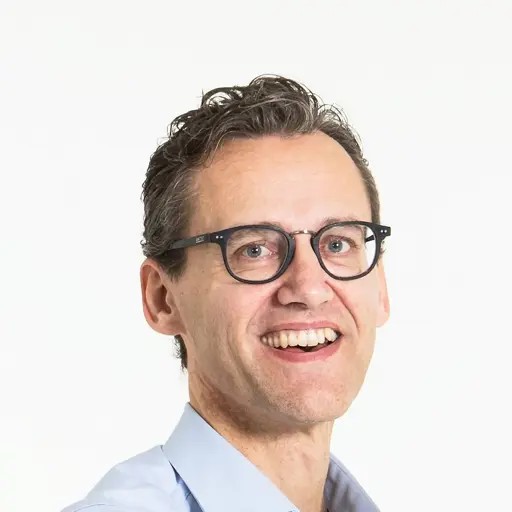
- Professor Pedagogical Merits, Algebra and Geometry, Mathematical Sciences