
When the World Economic Forum (WEF) gathers the world’s leading decision-makers in Davos on 19–23 January 2026, Chalmers University of Technology will participate as an academic main partner in Science House—an international meeting place for science, innovation, and sustainable societal development.
Chalmers’ presence in Davos highlights the research behind structural batteries—a breakthrough recently named one of the World Economic Forum’s Top 10 Emerging Technologies. The technology enables load-bearing materials to simultaneously function as energy storage and is seen as a potential paradigm shift for future electrified systems.
Research on structural batteries at Chalmers is conducted within the research group for lightweight composite materials and structures, led by Professor Leif Asp. The group has been a pioneer in the field and carries out research ranging from the synthesis and design of multifunctional materials, including structural batteries, to the design and analysis of damage tolerance in conventional composites for the aerospace industry.
An global arena for development
Each year, the World Economic Forum brings together the world’s leading decision-makers from politics, business, academia, and civil society to engage in dialogue on global societal challenges and long-term solutions. The annual meeting in Davos is one of the world’s most influential forums for issues related to the economy, technology, sustainable development, and geopolitics.
Chalmers participates in Davos within the framework of Science House, an international meeting place for science, innovation, and societal development organized by the academic publisher Frontiers. Here, research, industry, and decision-makers come together to discuss how new knowledge can be translated into practice. Chalmers takes part alongside leading universities such as MIT, Imperial College London, and the National University of Singapore.
Chalmers is participating in Davos because we can contribute the link between research, industry, and societal development

From research to industrial transformation
During the week, Chalmers’ focus is on how transformative technologies and education—combined with upskilling and reskilling—can strengthen the green transition of industry and contribute to long-term, sustainable competitiveness in Sweden, Europe, and globally.
“The major technological shifts and the green transition require world-class research and long-term capacity building. Chalmers is participating in Davos to contribute precisely this link between research, industry, and societal development,” says Martin Nilsson Jacobi, President of Chalmers University of Technology.

Chalmers activities at Science House
During the week in Davos, Chalmers will participate in Science House with several activities:
- Demonstration of structural battery composites, a technology recently named one of the World Economic Forum’s Top 10 Emerging Technologies.
- Professor Leif Asp leads Discover Structural Batteries, an impact session on how structural batteries enable a new generation of designs in which materials both carry load and store energy.
- President Martin Nilsson Jacobi chairs the panel discussion (Re)learning for a Tech-Driven Economy on how education, upskilling, and reskilling in industry need to evolve in a technology-driven economy and in the green transition, with participants from India and Canada.
- Technology demonstrations, including digital twins of humans and augmented reality (AR) for learning and industrial skills development.
- Meetings and dialogues with leading global universities, companies, and organizations in technology, industry, and innovation.
“In Science House, we can demonstrate how groundbreaking research, new technology, and skills development are connected in practice. It is at the intersection of these elements that the conditions for industrial transformation and long-term competitiveness are created,” says Björn Johansson, Professor and Head of Chalmers’ participation in Science House.
Participation in Swedish Lunch
Chalmers will also take part in Swedish Lunch, one of the most well-established Swedish meeting formats during the World Economic Forum. The event brings together international decision-makers, business leaders, and opinion leaders for dialogue on global leadership, applied technology, and societal development.
Contact
The Chalmers delegation is led by Martin Nilsson Jacobi, President of Chalmers University of Technology.
For more information about Chalmers’ participation in the World Economic Forum and Science House, please contact Björn Johansson, Professor and Head of Chalmers’ participation in Science House.
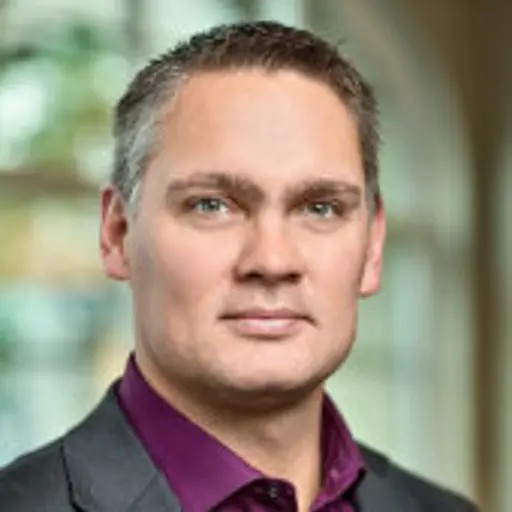
- Full Professor, Production Systems, Industrial and Materials Science