
Not only does a good working environment create job satisfaction and well-being, but it also attracts talented researchers and paves the way for good research results. This is the conclusion of staff in the Division of Applied Quantum Physics, who are constantly working on the issue, with resources large and small. The result: an inclusive and welcoming workplace with a more equal gender balance and strong cohesion

What characterises a good working environment? Colleagues in Chalmers’ Division of Applied Quantum Physics have given the issue a lot of thought. They see well-being and good workplace practices as key to many successes, and something that requires both awareness and a strong focus.
"Creating and maintaining a good working environment needs to be an ongoing process," says Göran Johansson, Professor and Head of Division.
He has come together with Professor Janine Splettstoesser, doctoral student Hanna Linn and research specialist Juliette Monsel to discuss what has been positive for the working environment at Applied Quantum Physics. The group agrees that the division is characterised by an open and welcoming feeling, where there is always someone to talk to.
"I think it is important that all the people working in the division know one another. We have joint coffee breaks and weekly meetings where everyone has the opportunity to talk about the overall situation and what is going on. It makes us familiar with our colleagues’ roles and work, and it creates a sense of belonging," says Janine Splettstoesser.

A sense of belonging and cohesion
Juliette Monsel explains that cohesion among doctoral students and postdocs is particularly strong – due to what happens at – and after – work.
"We make connections in numerous ways. We take breaks together in the afternoon, and there are many initiatives to get together after work, either to brainstorm and help one another with texts, or just to try to do something together," she says.
According to the group, even small things can make a difference. At lunch, most people meet in the division’s only kitchen, at about the same time. All offices have glass walls facing the corridor, which means colleagues are more visible to one another than they would be in standard corridors.
"One detail that I also think is important is that all doctoral students get their own desk – partly to feel that they have a place and belong in the division, and partly because many do not like to move around in an open-plan environment," says Göran Johansson.
Diversity creates well-being and better results
The Division of Applied Quantum Physics employs around 40 people of many different nationalities. The gender balance among permanent staff is approximately 50/50, and 30 per cent of the entire team is female. The group believes that the fact that the division has a diversified environment and a better gender balance than many other divisions at Chalmers is conducive to both job satisfaction and better research results.
"If we want an inclusive environment, creative discussions and the best results, we need a division that is not too homogenous. The more mixed we are, the greater the challenges we face and the more ideas we come up with," says Janine Splettstoesser.

Janine Splettstoesser, Hanna Linn and Juliette Monsel have all experienced being the only woman in male-dominated environments at universities of technology. The fact that this workplace is more diverse was an important reason why Hanna Linn came here, she says.
"Diversity begets diversity. During my time at KTH, I was one of only a few women; nearly all of the doctoral students and professors in the department were men, and my impression from the outside was that there seemed to be a laddish atmosphere in the research teams. I felt that I would not fit in as a doctoral student in that environment. The team at Applied Physics here at Chalmers felt completely different, and the better gender balance was one of the reasons why I applied for a doctoral position here," says Hanna Linn.
The importance of recruitment as a tool
Göran Johansson emphasises the importance of never ‘letting up’ on striving for a good and inclusive working environment, especially when recruiting.
"Usually, the majority of applicants for our positions are men, and at the same time, people tend to choose those who are most like themselves. So, you have to be aware of this and keep it in mind at all times," he says.
Janine Splettstoesser agrees with him.
"There is a lot to consider when recruiting. Many people focus solely on the candidates’ numbers and results, but it is also important to consider how we create a good working environment and value the candidates’ commitment to academic citizenship*, for example," she says, and continues:
"In our case, a proactive recruitment strategy has also been key to creating a “diversity base” and paving the way for a broader group. In addition to broad and open recruitment, I think it is important sometimes to be brave enough to contact people directly. You cannot just sit back and wait for the gender balance to improve – you need to be proactive, at least sometimes."

Everyone can contribute
Janine Splettstoesser points out that if you want to contribute to a more gender-equal academia, there is a lot to be done in your everyday life. She refuses to go to conferences if only men are speaking, and she often writes to conference organisers to ask how they deal with their male-dominated lists of speakers.
"It does not always go down well, but I also meet many people who are embarrassed and admit that they had not thought about the issue at all until now. I think we can all help make a difference by pointing out the biases we see," she says.
*Academic citizenship
Academic citizenship means engagement and activities that go beyond regular teaching and research, and contribute to a well-functioning academic environment. This may involve coaching and mentoring, supporting colleagues, participating in development and strategy work, or taking on various management and service tasks.
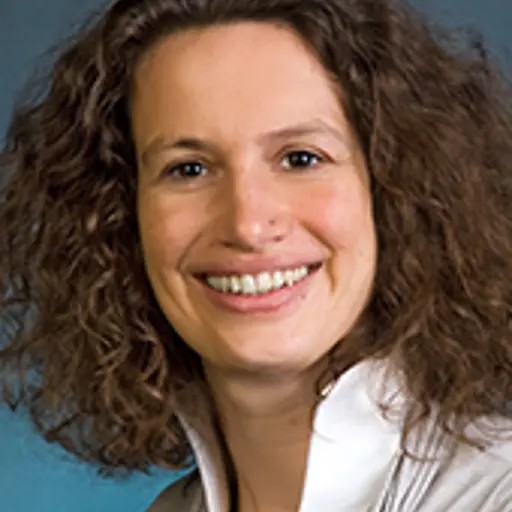
- Full Professor, Applied Quantum Physics, Microtechnology and Nanoscience

- Staff Scientist, Applied Quantum Physics, Microtechnology and Nanoscience
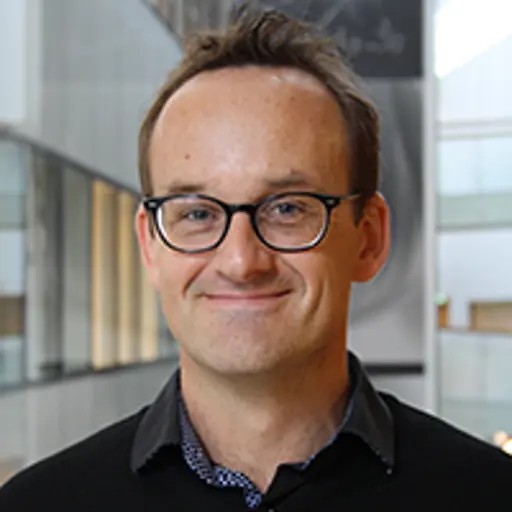
- Full Professor, Applied Quantum Physics, Microtechnology and Nanoscience