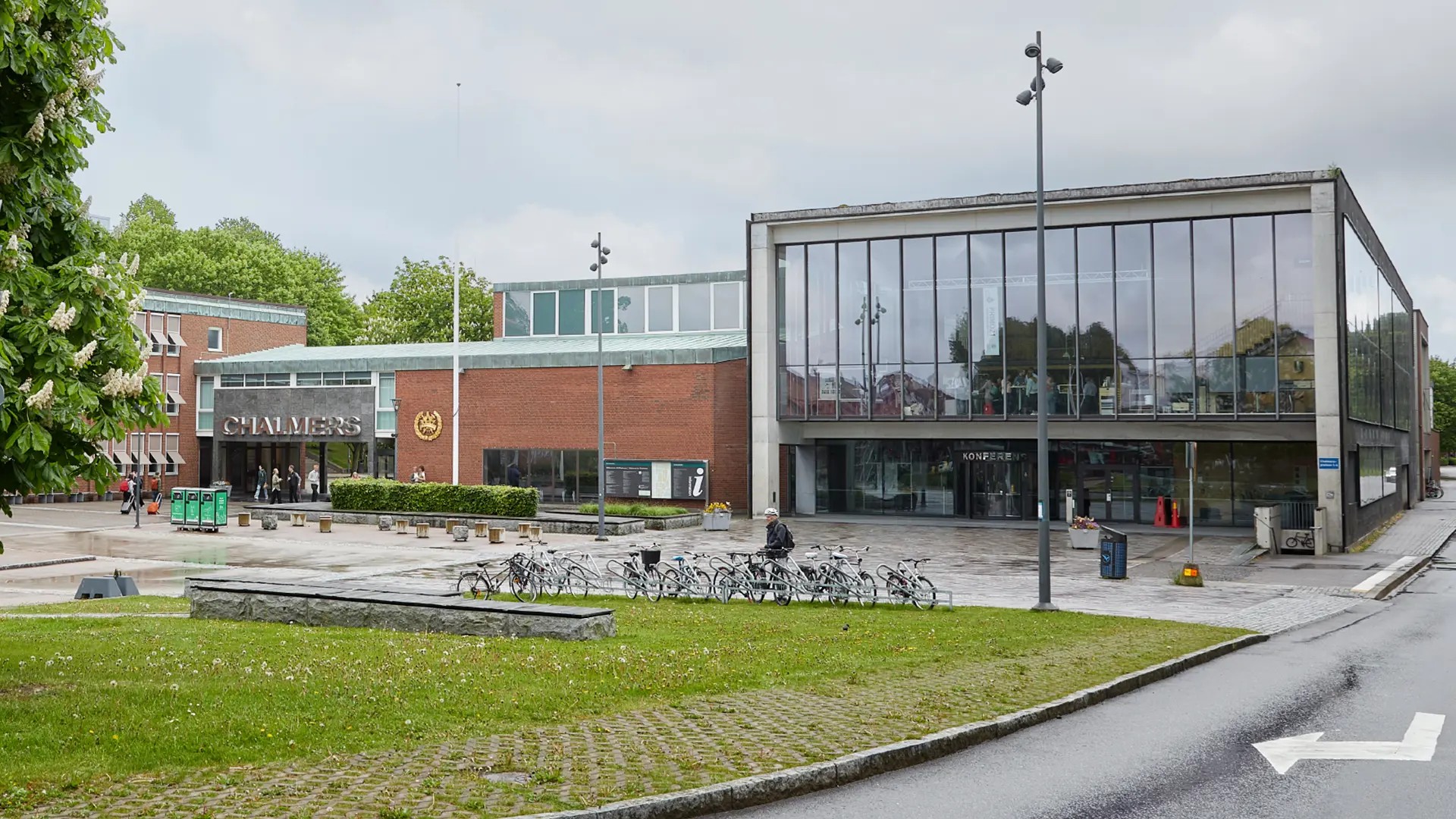
Three new departments are being established as Chalmers University of Technology intensifies its efforts to further strengthen research in key areas. The initiative concerns Environmental and Energy Sciences, Physics and Astronomy, and Mechanical Engineering. At the same time, the Chalmers School of Maritime Studies is being established.
Research and academic excellence are reinforced when researchers in closely related fields can more easily collaborate and exchange ideas. Visibility is also enhanced when scientific disciplines are organised in a way that is clear to the wider research community. These are the core ideas behind the departmental restructuring being carried out during the spring.
The goal is to enhance academic quality and continue advancing towards international top standards.
"By bringing together closely related activities within a shared departmental structure, we increase the visibility of three of Chalmers’ strong research areas. We also want to create opportunities for new collaborations, scientific advances and innovations within these fields", says Deputy President Maria Elmquist.
Three parallel change projects were initiated by Chalmers’ management at the start of the autumn semester. Since then, work has been underway to plan and prepare the new departments, which were decided by the President shortly before the end of the year. The organisational change will formally take effect on 1 April 2026.
The organisation of Chalmers’ maritime education programmes has also been reviewed. In connection with the departmental restructuring, it was decided to establish the Chalmers School of Maritime Studies as a separate organisational unit within the university as of 1 January 2026. Read more about each area below.
Department of Environmental and Energy Sciences
Chalmers already conducts strong research and maintains well-functioning collaborations with societal actors in the environmental field. The assessment is that the impact can become even greater when environmental and energy-related research activities are now brought together within a single department.
Lena Neij has been recruited as Head of Department and will take up the position on 1 May 2026.
Fredrik Hedenus is Acting Head of Department until then.
Visit the Department of Environmental and Energy Sciences
Department of Physics and Astronomy
Most internationally leading universities bring together astronomy, space and earth sciences with the field of physics in a single organisational structure. Chalmers is now taking the same approach. The aim is to consolidate efforts in the area and strengthen the scientific weight in physics and astronomy within a joint departmental structure.
Mattias Marklund has been appointed Head of Department.
Department of Mechanical Engineering
Until now, Chalmers’ research in mechanical engineering has been divided between two departments. By bringing these activities together within a single departmental organisation, the research field will be strengthened and broadened, while research can be conducted under a shared name that is clear in an international context.
Rikard Söderberg is Head of Department.
Chalmers School of Maritime Studies
At the turn of the year, the Chalmers School of Maritime Studies was established at Lindholmen, bringing together maritime education, industry collaboration and infrastructure related to shipping. The initiative strengthens Gothenburg’s maritime tradition and contributes to attracting more students to a field with significant recruitment needs. The independent organisational form also makes it easier to establish further collaborations, for example with government agencies and other actors in the maritime sector.
Fredrik Olindersson has been appointed Head of the Chalmers School of Maritime Studies as of 1 January 2026.