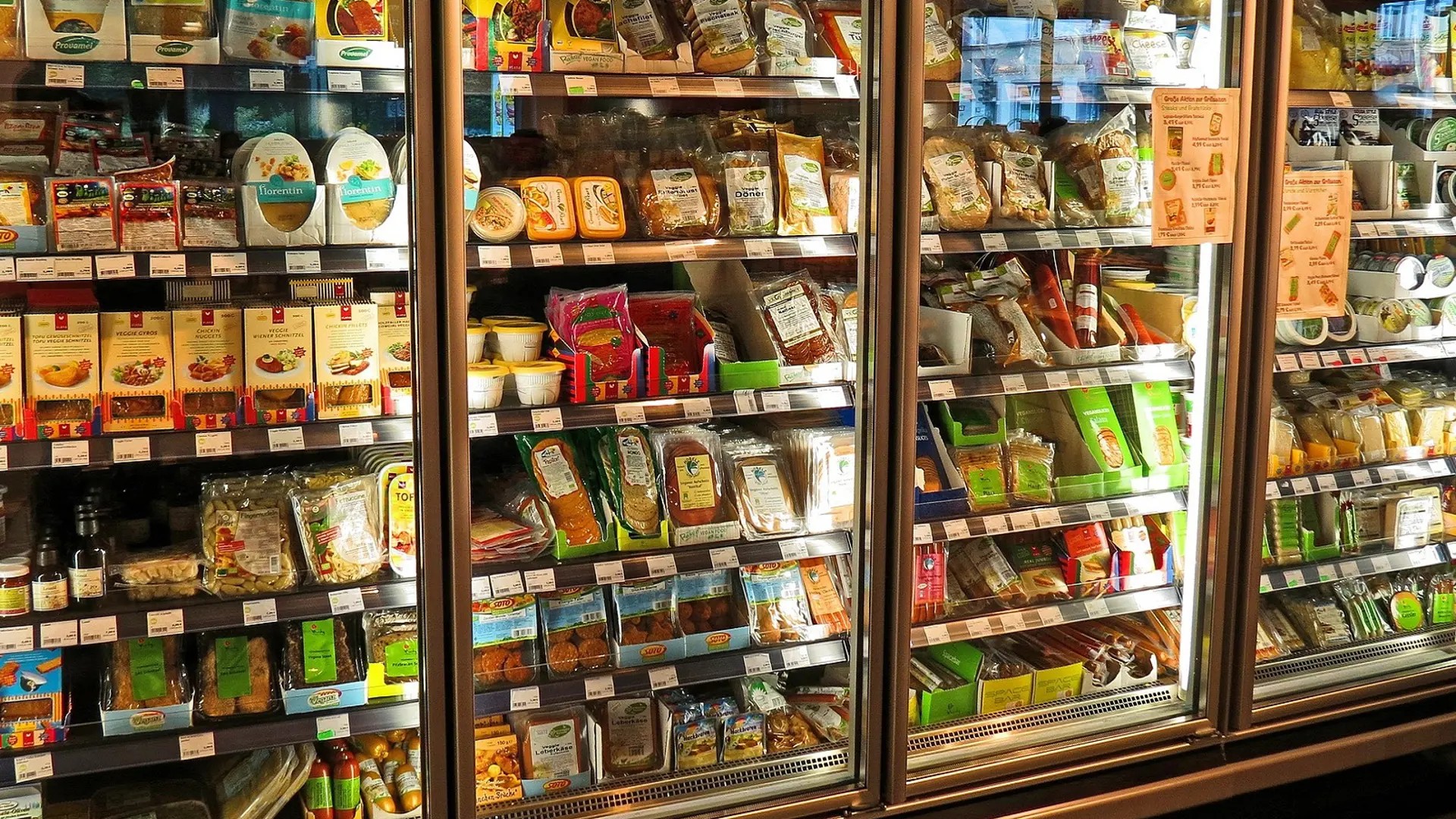
As the popular saying goes "sharing is caring" – and the growing share of renewable energy sources means we need to consider existing energy as a shared resource. The supermarket on the corner may not need to run its refrigerators at full power while households are going about their morning routines, and households could possibly lower their indoor temperature while they leave home for the day. PhD student Tommie Månsson has an idea on how to strike the right balance.
On a typical weekday morning, hundreds of thousands of Swedish households prepare for the day ahead. People brew coffee and make breakfast, shave, blow-dry their hair and charge their mobile phones and laptops. This creates power peaks in electricity consumption, meaning that the electricity grid runs at high pressure. This i problematic for grids with a large proportion of hard-to-regulate renewable energy sources such as solar, wind, and wave power.
– This is where smart grid research comes in, and part of the solution for these morning hours for example, could be for supermarkets to reduce cooling to balance the grids electricity supply and demand. When people leave home for work and school, there would be a surplus of electricity in the grid – which would be saved in the supermarkets' refrigerators and freezers. Thus, an environmentally friendly virtual battery would be created, says Tommie Månsson.
Swedish supermarkets account for 3 percent of Sweden's total electricity consumption, of which the refrigerators alone account for about 1.5 percent. Tommie Månsson, who will soon receive his PhD from the Department of Architecture and Civil Engineering, has in his research project investigated the potential of using supermarkets and their cooling systems to balance the electricity grid and thus increase the opportunities for a larger share of renewable energy in the electricity grid.
– My contribution to the smart grids of the future are models for estimating the storage capacity for supermarkets, is how long store refrigerators can be switched off without damaging the food, Tommie says.
Users balance the electricity grid
Turning off the refrigerators affects the entire building's energy system, so to use the flexibility efficiently, you first need to understand the current situation. Once you understand the temperature development and performance, you can create mathematical models and together with user data generate forecasts.
– Overall, these elements come together to enable a concept called "Demand Response" for supermarkets. This refers to how the user side – in this case, the supermarket – adapts to the available energy in the electricity grid. Tommie explains that demand response is a prerequisite for creating smart grids with a large proportion of renewable energy.
Studies on in-store refrigerators make for unique dataset
Following experiments in a lab environment in which researchers created input values for the thermal performance, the next step was to observe how customers interacted with refrigerators in a supermarket. The partner was the German grocery chain REWE. For a month Tommie and his colleagues conducted studies in a store containing around eighty refrigerators. They observed the speed at which customers opened the refrigerators, the angle at which they opened them, how long the doors were open for with each opening, and how this affected temperature development.
– The result was a unique dataset that is important for research, as the temperature development of the chilled foods determines the capacity of a demand-response system. The heating of refrigerated goods thus reduces the capacity and the possibility of contributing to the electricity system, says Tommie Månsson.
Technology with a bright future
Tommie believes that there is high potential for applying his results. The models, input data and technology already exist, so the the next step is to put them together into a system, take a holistic view and optimise it.
– Much more research could be done on behavioural patterns and their ultimate effect on the electricity grid. In terms of the technical side however, pilot studies would be the next step in determining the technical and economic barriers exist to managing grocery stores. Futhermore, we must recognise that we need to start managing the in the grid as our shared asset, concludes Tommie Månsson.
Tommie Månssons will defend his doctoral thesis "Supermarket refrigeration systems for demand response in smart grids" on December 11th, at 10 a.m.
Scientific articles connected with the project
Journal of Building Engineering: Analysis of door openings of refrigerated display cabinets in an operational supermarket International
Journal of Refrigeration: Co-Heating method for thermal performance evaluation of closed refrigerated display cabinets
Funding
The PhD project "Supermarkets as thermal buffers for renewable electricity grids" was mainly funded by Climate-KIC