Physics and Astronomy host three infrastructure units at Chalmers: Onsala Space Observatory, Chalmers Material Analysis Laboratory (CMAL), and Chalmers e-commons. We also host the research center Formulaex.
Coordinated from the department, the Graphene Flagship has brought graphene innovation out of the lab and into commercial applications. It is one of the largest the European Commission funded research projects ever.
Chalmers Materials Analysis Laboratory (CMAL)
Chalmers Materials Analysis Laboratory, CMAL, operates as a Chalmers Research Infrastructure and is open to all researchers at Chalmers University of Technology and University of Gothenburg on equal terms.
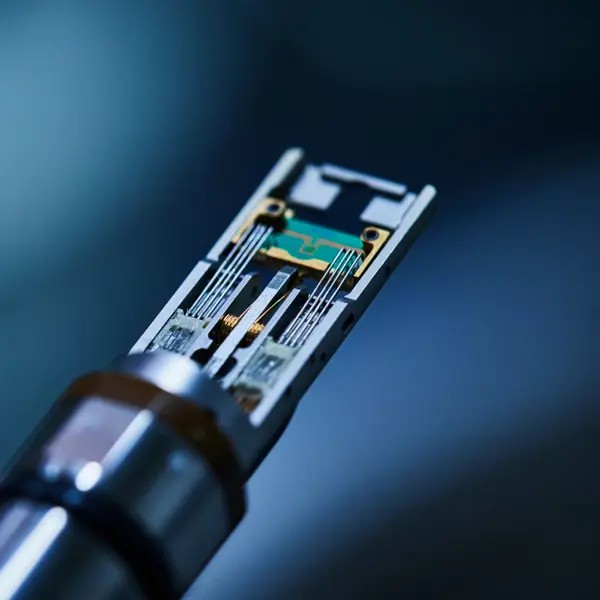
Chalmers Material Analysis Laboratory (CMAL)
Chalmers Materials Analysis Laboratory (CMAL) is a research and user facility providing basic and state-of-the-art instruments with relevance to materials science. It is our vision that the multitude of instruments, professional technical support staff and an excellent research environment will provide unique possibilities for conducting world-class materials research. The lab offers a broad park of instruments and tools, primarily in the fields of electron microscopy, X-ray diffraction, optical microscopy and mass spectrometry.
Chalmers e-commons
Chalmers e-commons is a digital research infrastructure that provides support to researchers, research groups and other research infrastructures at Chalmers in matters related to research data and computing.
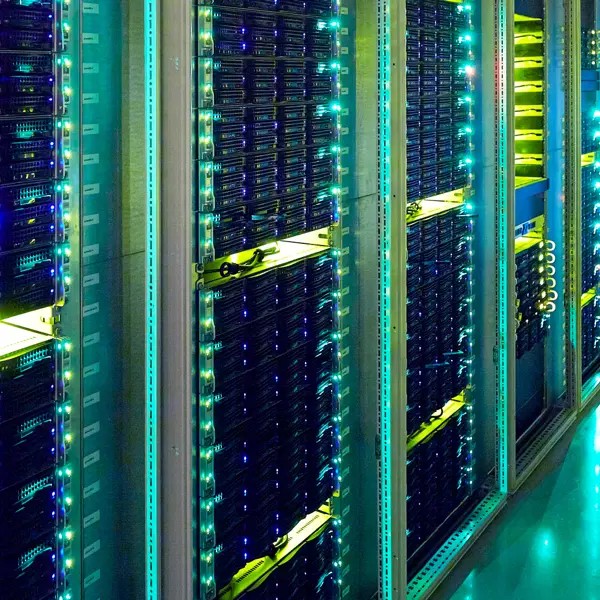
Chalmers e-commons
The activities cover the entire research process – from data collection, analysis and large-scale computing to storage, sharing and publication of data. e-Commons coordinates expertise and resources at Chalmers and collaborates with national infrastructures such as NAISS, SND and InfraVis.
Formulaex
The Formulaex centre is a SSF-funded industrial research centre for functional RNA delivery. The three academic partners Chalmers University of Technology, Karolinska Institutet and University of Gothenburg carry out research in close cooperation with AstraZeneca, Vironova, Camarus and Nanolyze. The centre contributes with fundamental knowledge required for the design of safe and efficient nanoscale drug-delivery vehicles for next generation nucleotide drugs.
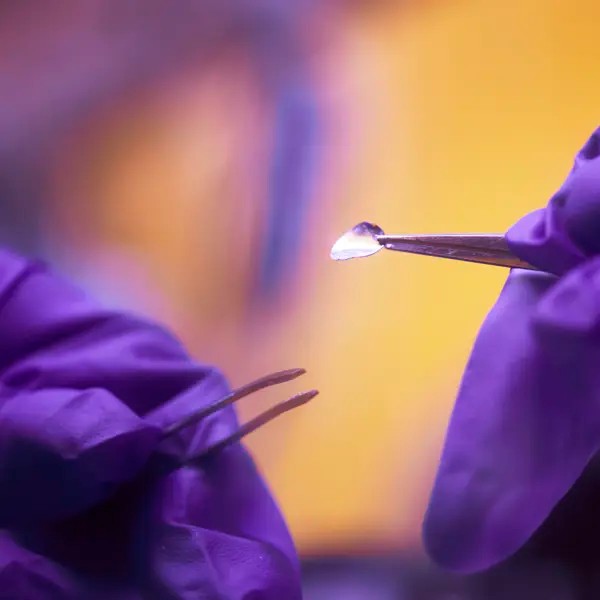
Formulaex
The Formulaex centre is a SSF-funded industrial research centre for functional RNA delivery. The three academic partners Chalmers University of Technology, Karolinska Institutet and University of Gothenburg carry out research in close cooperation with AstraZeneca, Vironova, Camarus and Nanolyze. The centre contributes with fundamental knowledge required for the design of safe and efficient nanoscale drug-delivery vehicles for next generation nucleotide drugs.
Graphene Flagship
Bringing together 126 academic and industrial partners in 13 research and innovation projects and 1 coordination and support project, the Graphene Flagship initiative will continue to advance Europe’s strategic autonomy in technologies that rely on graphene and other 2D materials. The initiative, which builds on the previous 10-years of the Graphene Flagship, is funded by the European Commission’s Horizon Europe research and innovation programme.
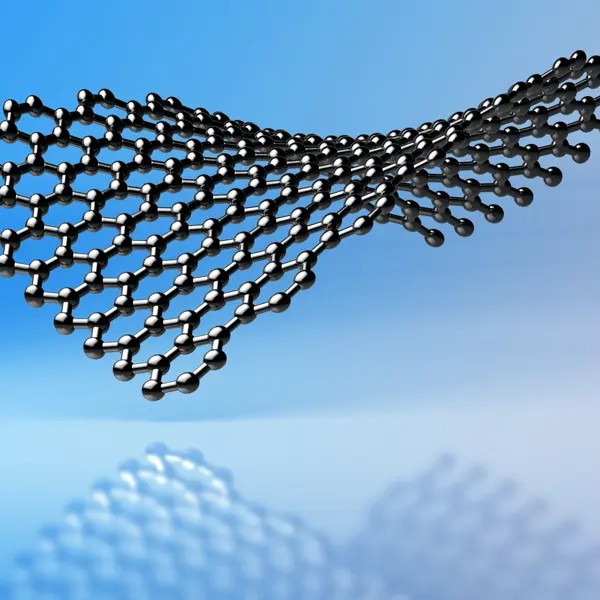
Graphene Flagship
The Graphene Flagship has brought graphene innovation out of the lab and into commercial applications.
Onsala Space Observatory
Onsala Space Observatory, the Swedish National Infrastructure for Radio Astronomy, provides Swedish and international scientists with world class equipment to study the Earth and the rest of the Universe.
In Onsala, the observatory operates three radio telescopes for astronomical research. The observatory also participates in international radio astronomy projects such as VLBI (network of radio telescopes) and the APEX and ALMA radio telescopes in Chile, as well as in the construction of the new SKA radio telescope to be built in South Africa and Australia.
Onsala Space Observatory is an internationally established geodetic fundamental station. We measure and study many global geodynamic phenomena, i.e., we study how the Earth changes. That means that we do research on Earth rotation, reference systems, plate tectonics, land uplift, gravity changes, Earth and oceanic tides, earthquakes, and water vapour in the atmosphere. For the observations we use radio telescopes (the Very Long Baseline Interferometry, VLBI, technique), global navigation satellite systems (GNSS), remote sensing satellites, gravimeters, microwave radiometers, and tide gauges. There is also a seismometer, belonging to the Swedish National Seismic Network operated by Uppsala University, located at the observatory.
The observatory is also active in developing technologies, components, instruments and methods for radio astronomy and Earth science observations.
Onsala Space Observatory was founded in 1949 by Professor Olof Rydbeck. The Department of Physics and Astronomy hosts the observatory, and the operation is operated on behalf of the Swedish Research Council.
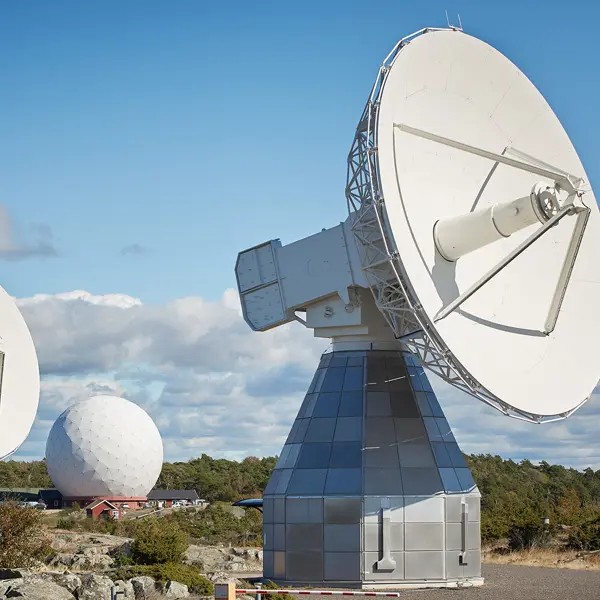
Onsala rymdobservatorium
Onsala Space Observatory is the Swedish national infrastructure for radio astronomy.