The course syllabus contains changes
See changesCourse syllabus adopted 2025-03-10 by Head of Programme (or corresponding).
Overview
- Swedish nameMetalliska material för cirkularitet och framtida trender: hållbarhetsaspekter
- CodeTRA475
- Credits2.5 Credits
- OwnerTRACKS
- Education cycleSecond-cycle
- Main field of studyChemical Engineering, Mechanical Engineering, Engineering Physics
- DepartmentTRACKS
- GradingUG - Pass, Fail
Course round 1
- Teaching language English
- Application code 97186
- Maximum participants30
- Minimum participants8
- Open for exchange studentsNo
Credit distribution
Module | Sp1 | Sp2 | Sp3 | Sp4 | Summer | Not Sp | Examination dates |
|---|---|---|---|---|---|---|---|
| 0125 Project 2.5 c Grading: UG | 2.5 c |
Examiner
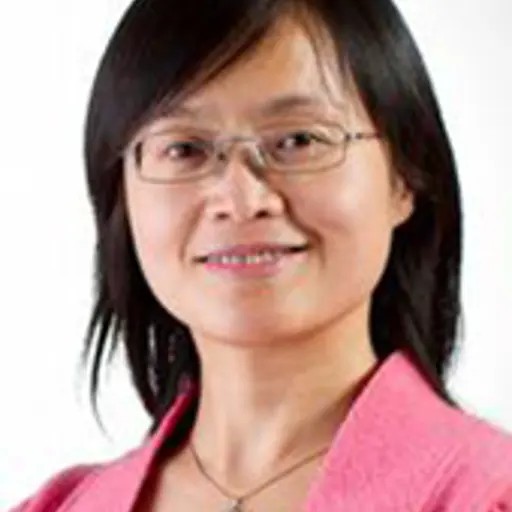
- Fang Liu
- Professor, Materials and Manufacture, Industrial and Materials Science
Eligibility
General entry requirements for Master's level (second cycle)Specific entry requirements
A degree of at least 180 ECTS within Engineering and/or Technology or the equivalent. English level should be equivalent to the Swedish upper secondary course English 6.Course specific prerequisites
We recommend that the students should have a general background on materials science and engineering, materials chemistry, production, mechanics, or applied physics.Aim
The aim of this course is to provide knowledge about the essential role of metallic materials in the green transition and the sustainability challenges related to these materials during the transition. Additionally, participants will develop skills to critically analyse sustainability aspects of metals and metal-related production and suggest measures towards a circular economy.Learning outcomes (after completion of the course the student should be able to)
- Identify sustainable challenges related to the use of metallic materials we are facing and propose possible solutions.
- Analyse sustainability aspects of metallic materials and critically evaluate solutions for new alloy designs with open solutions spaces, which includes to be able to handle uncertainties and limited information.
- Evaluate the impact of sustainable metal solutions in a global, environmental, economic, and societal context.
- Work in multidisciplinary teams and collaborate in teams with different compositions.
- Orally explain and discuss sustainable challenges and solutions associated with metallic materials.
Content
This course explores the following topics:- Sustainability challenges - the big picture
- The essential role of metals in the green transition
- Circular economy strategies for metals
- Case studies: e.g. mega casting and additive manufacture
Organisation
The course emphasizes active dialogue both among participants and between participants and lecturers. It integrates theoretical knowledge with real-world professional practices through a blend of in-person sessions, online workshops, and self-paced study via the Canvas learning platform. Between the sessions and workshops, participants engage in lectures, literature studies, analyses, and reflective exercises while networking and collaborating with peers.Literature
- Global resource outlook 2024 - Bend the trend, UN Environment Programme, Global Resources Outlook 2024 - Bend the trend: Pathways to a Liveable Planet as Resource Use Spikes
- The materials science behind sustainable metals and alloys - Raabe 2023, https://doi.org/10.1021/acs.chemrev.2c00799
- Sustainability through alloy design: Challenges and opportunities - Caan et al. 2021, https://doi.org/10.1016/j.pmatsci.2020.100722
- Making sustainable aluminium by recycling scrap: The science of ¿dirty¿ alloys - Raabe et al. 2022, https://doi.org/10.1016/j.pmatsci.2022.100947
- Other selected articles from international journals will also be used and provided on Canvas.
Examination including compulsory elements
- Participation and online workshops (10%) - Participants are required to attend in-person sessions and online workshops, actively engaging in discussions.
- Quizzes (20%) - Weekly quizzes will be conducted via the Canvas platform to assess participants' understanding of the course material.
- Project (70%) - Participants carry out a project and present their results orally.
The course examiner may assess individual students in other ways than what is stated above if there are special reasons for doing so, for example if a student has a decision from Chalmers about disability study support.
The course syllabus contains changes
- Changes to course rounds:
- 2025-03-11: Examinator Examinator Fang Liu (fangliu) added by UOL
[Course round 1]
- 2025-03-11: Examinator Examinator Fang Liu (fangliu) added by UOL