Course overview
- Course codeFBBT005
- ECTS credits3
- DepartmentLIFE SCIENCES
- Starts2026-03-16
- Ends2026-03-20
- LanguageEnglish
- Nordic Five Tech (N5T)The course is free of charge for PhD students from N5T Universities.
- ApplicationContact the course coordinator
Course coordinator
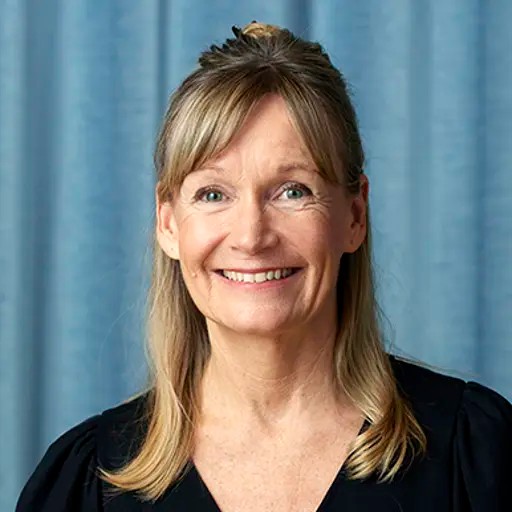
- Ingrid Undeland
- Full Professor, Food and Nutrition Science, Life Sciences
About the course
The course comprises some preparatory reading and project initiation, an intensive course week at Kristineberg Research and Innovation centre in Fiskebäckskil, and studying afterwards. During the week at Kristineberg, there will be lectures, study visits, project work plus project presentations.
- The most common methods for tank-/sea-based cultivation of extractive species (e.g. seaweed and mussels), including co-culture with other organisms at same or different trophic levels (e.g. IMTA)
- The main systems for farming of fish on land, at sea and in lakes as well as co-culture with other organisms at different trophic levels (e.g. IMTA)
- Nutritional requirements and development of sustainable feeds using alternative and renewable ingredients for organisms in fed aquaculture
- How feed for the most common aquacultured fish species such as salmon and marine species is produced, including the main steps of fish meal/fish oil and soy meal/soy oil production
- The most common methods for capture fisheries, including knowledge about main Swedish fishing areas, quota determination, species etc.
- How we can reach diversification and increased utilization of wild caught and aquaculture species for food
- What are the key steps of the seafood production chain based on typical examples of value chains
- What are current uses, and possibilities for value adding of filleting co-products
- What are the main criteria determining seafood quality from a (a) chemical/nutritional perspective(e.g. , (b) sensorial perspective (c) safety perspective; the latter including microbial safely as well as environmental contaminants
- What do we know about consumer attitudes towards seafood and how can we reach out and make impact with scientifically based information on seafood
- What are the most well-documented health effects from a seafood containing diet
- How to perform sustainability analyses of new and existing seafood value chains
- Examples of how to integrate digitalisation and AI in the seafood production system
- Key parts of the legal framework around seafood production
- Examples of how seafood production can be a basis for tourism
- Examples of BLUE FOOD as a basis for entrepreneurship
SCHEDULE
The seafood value chain; from production to consumption (3 ECTS)
Sunday 15 March 2026
Arrival to Kristineberg Center for Marine Research and Innovation
Monday 16 March
07:30-08:20 Breakfast
08:30-10:00 Welcome & Presentation of the station and roundtrip of the premises
Ingrid Undeland, Chalmers & Fredrik Gröndahl, KTH
10:00-10:15 Coffee break
10:15-12:00 Fed aquaculture - a diversity of techniques and species as well as glimpse
of Swedish Aquaculture Kristina Sundell, GU
12:00-13:00 Lunch break
13:00-14:00 Design of aquafeed -including plant based/new ingredients-Markus
Langeland, RISE
14.15-15.45 Marine and lake fisheries; ecosystem effects -Malin Skog & Per Pettersson,
Vi Svenska Fiskare
15.45-16.00 Coffee break
16:00-16:45 Cultivation of extractive species I (bivalves) - Adrianus Both, IVL
17:00-17:45 Challenges and possibilities for value adding of filleting co-products
Ingrid Undeland, Chalmers
19:00-21:00 Get together party
Tuesday 17 March
07:30-08:20 Breakfast
08:30-10.30 Boat trip and harvest of seafood Fredrik Gröndahl, KTH
10.30-11.15 The legal framework around seafood production Jonas Kyröntiita, GU
11.15-12.00 Project work
12:00-13:00 Lunch break
13.00-13.45 Cultivation of extractive species II (seaweed) Göran Nylund, Nordic
Seafarm
14:00-15.30 Seafood value chains Part 1: Pronofa/Saltsmak AB, Fredrik Norén, Nordic
Seafarm, Kajsa Olsson
15.30-16.15 Fish meal & fish oil production for non-food uses Klaus Henri Kristoffersen,
FF Skagen
16.15-18.00 Independent project work
18:00-19:00 Dinner
19:00- Hanging out/Independent project work
Wednesday 18 March
07:30-08:20 Breakfast
9.00-11.00 Study visit Marenor AB
11.00-12.00 Blue food seminar -Economic perspectives on pelagic fish value chains
12:00-13:00 Lunch break
13:00-14:00 Seafood and tourism Eva Maria Jernsand, GU; Reine Patriksson,
Brygghuset
14:15-16:00 Sustainability analyses within the seafood production system
Fredrik Gröndahl, KTH & Kristina Bergman, KTH
(Coffee Break at 15)
16:15-17:00 Seafood and health - Chalmers
18:00-19:00 Dinner
19:00- Independent project time
Thursday 19 of March
07:30-08:20 Breakfast
08:30-09:15 The use of digitalization & AI within aquaculture Ivan Stenius KTH
9:30-10:15 Traceability/authentication in the seafood production chain-TBD
10:15-10:30 Coffee break
10.30-11.15 Consumption & consumer attitudes in relation to seafood John Armbrecht,
GU
11.30-12.15 Seafood value chains part 2: Anders Högberg, Orkla Foods Sweden
12.15-13.15 Lunch
13.15-17.15 Seafood quality from chemical, physical, microbial and sensorial
perspectives Ingrid Undeland, Chalmers, Jonas Steenholdt Sørensen, DTI & Jun Nimi
RISE
18:00-19:00 Dinner
Friday 20 of March
07:30-09:00 Breakfast
09:00-12:00 Presentation of project work
12:00-13:00 Lunch
13:15-15:00 General reflections from the course, Quiz and evaluation
Ingrid Undeland & Fredrik Gröndahl
15:00 Departure
More information
(The main part of the course will take place in 16th-20th of March, 2026)
Contact Ingrid Undeland (undeland@chalmers.se)
Register for the course via mail (undeland@chalmers.se)
Literature
The involved teachers will share sci papers and handouts from their presentations. There is no book covering all of the aspects.
Lecturer
Teachers from Chalmers, GU, RISE, KTH, IVL, industry