
Our research within Injury Prevention aims to prevent injuries arising due to extreme mechanical loading of the human body — for example loads that occur in road traffic accidents. Priorities are based on crash statistics and the work spans injuries and injury mechanisms from the microscopic level to whole‑body responses under severe external mechanical loading.
The goal of the research is to develop principles for new or improved countermeasures, for example in vehicles. This may involve airbags, whiplash protection or child safety systems. It may also involve personal protective equipment such as helmets or motorcyclists’ clothing.
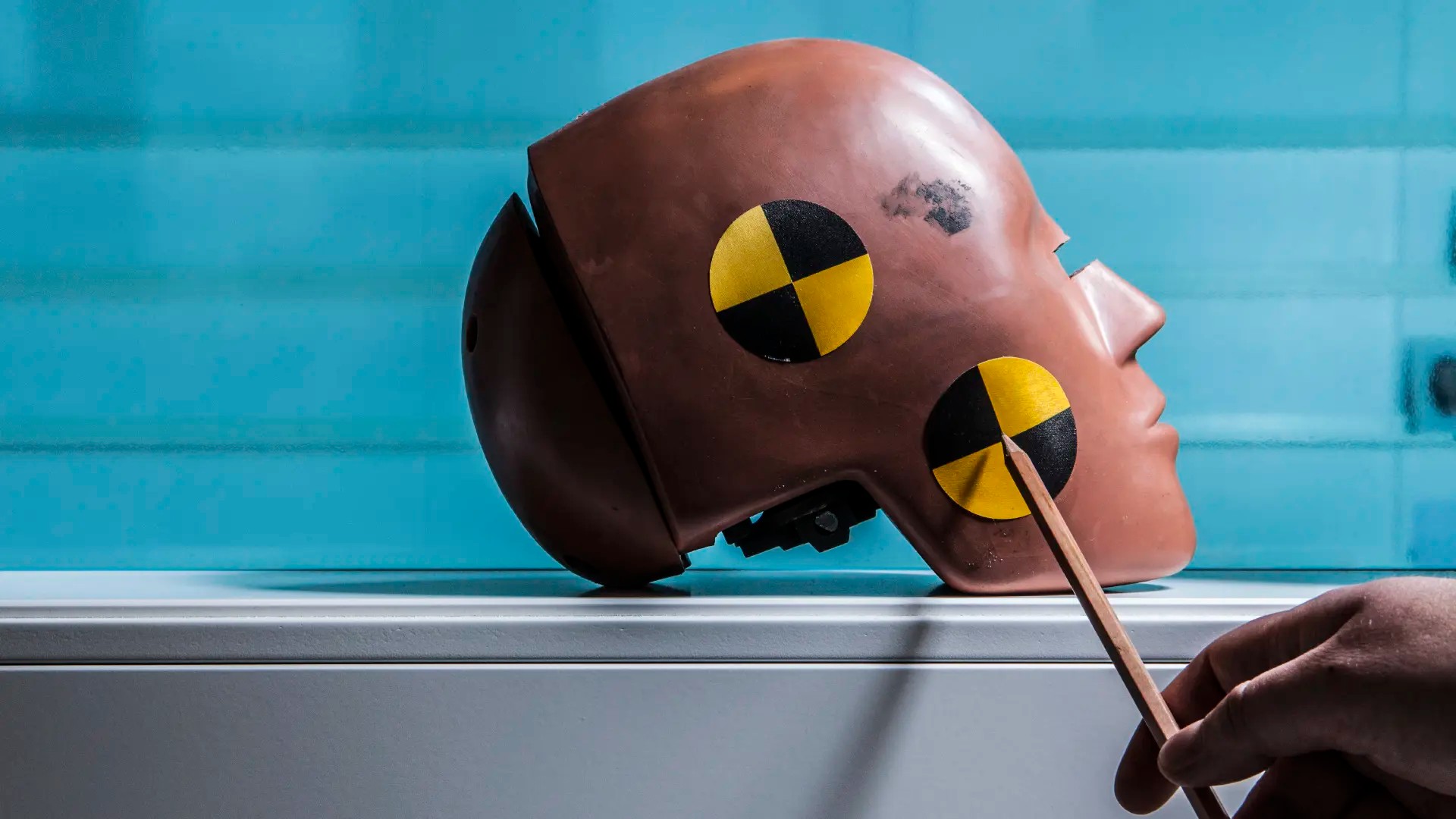
To achieve these goals, we need to develop tools such as crash test dummies and computer‑based models of the human body, so called HBMs. In addition, test methods are needed that in a controlled manner represent the loads to which the human body is exposed in real‑world violent situations. One aim is to define which measurements—for example in a crash test dummy or an HBM—are required to determine whether a countermeasure is sufficiently effective.
We have key roles in the development of two families of HBMs, The SAFER HBM and the VIVA+.
Head of research group

- Head of Division, Vehicle Safety, Mechanical Engineering