Our research is mainly focused on understanding the factors contributing to crashes and reducing the risk of their occurrence, and reducing the risk of personal injuries arising mainly in traffic collisions but also including other violent situations with a risk for personal injuries.
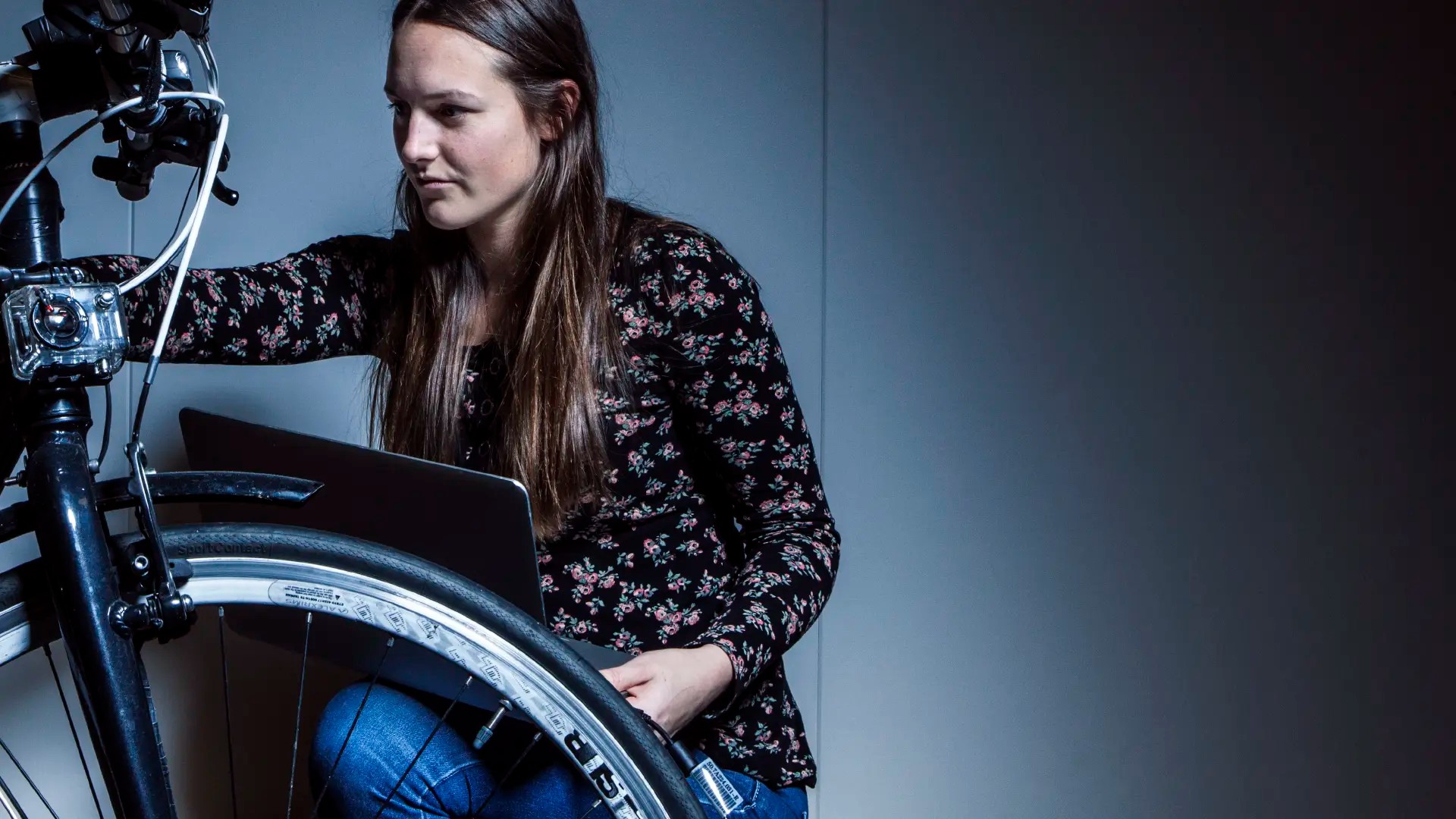
Our researchers work with both experimental and computational methods. We investigate how human-vehicle-environmental factors contribute to the occurrence of a collision. In addition, we study crash mechanics for various types of vehicles and road users to understand how injuries arise and how they can be avoided.
We develop and use physical and virtual models of road users, vehicles, and the road environment. The virtual include behavioural models for different types of road users (e.g., drivers, pedestrians, cyclists). The models are used for computer‑based safety assessments where we simulate safety‑critical situations. This may involve a traffic environment with vehicles and road users where the driver’s behaviour is simulated before a collision.
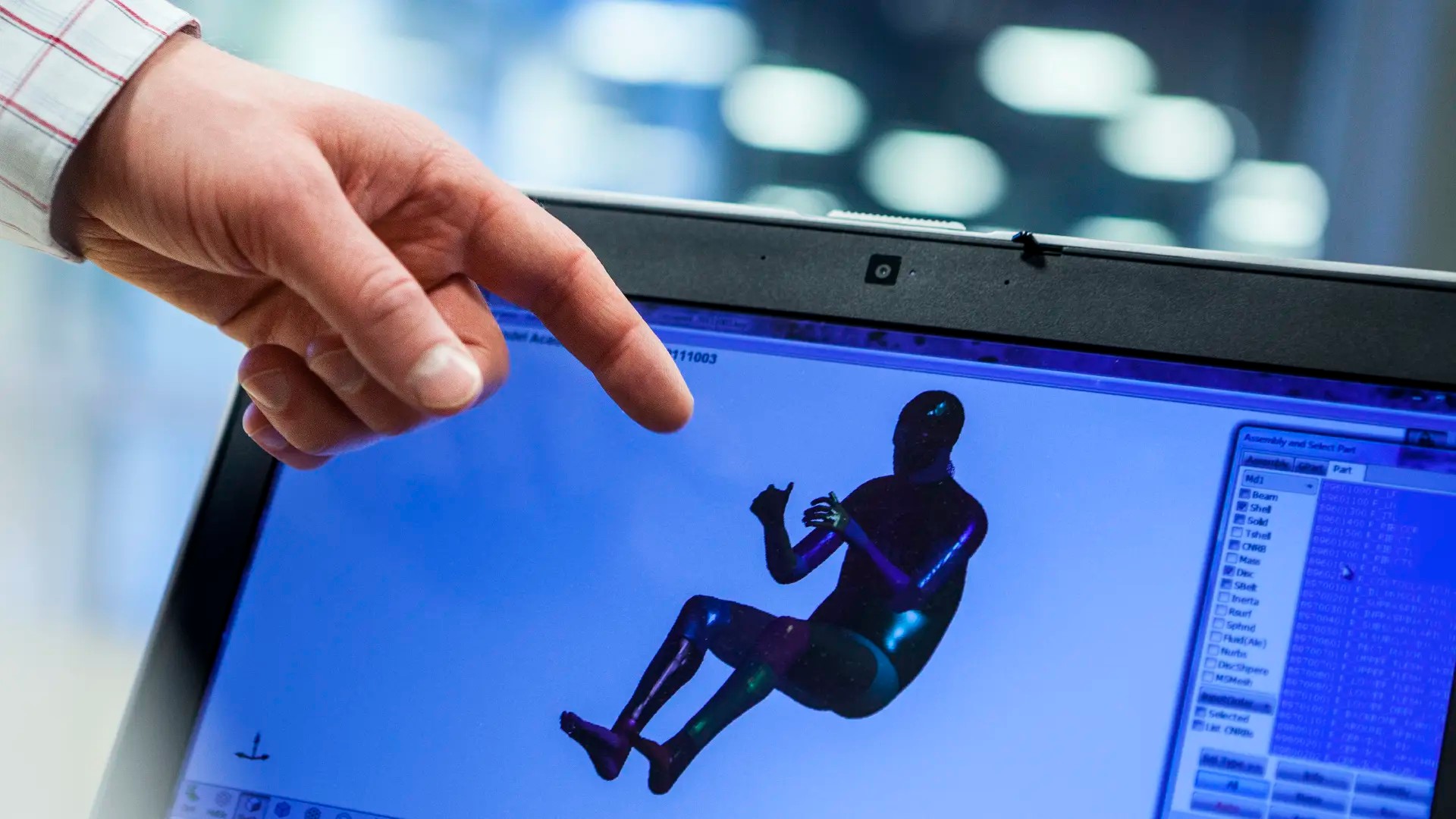
In addition, we develop and use human body models (HBMs) to analyse motion, mechanical loading, and injury mechanisms in various crash sequences and other violent situations. This may also involve the course of events during a collision where models of vehicles and the physical environment interact with the human body model.
Through our national and international collaborations, we gain access to critical baseline data such as databases with naturalistic driving data, crash data, traffic environment information These may for instance contain information on road‑user behaviours or give access to medical data of various kinds for evaluations and validations of our HBM’s.
The Division of Vehicle Safety has a broad portfolio of research projects funded by both public and private organisations. We are active in projects funded by the European Commission and contribute to many international technical committees working to develop vehicle and traffic safety regulations and policies.
The division has two main research areas:
• Crash Analysis and Prevention
• Injury Prevention
The division is responsible for teaching within the international master’s programme Mobility Engineering, including the courses “Vehicle and Traffic Safety”, “Active Safety” and “Injury Biomechanics”. We also offer doctoral‑level courses, including the IDEA League Summer School, Analysis and Modelling of Road User Behaviour, and we have developed an online course titled Road Traffic Safety in Automotive Engineering that forms part of a micro‑master’s (MOOC) delivered online. We give courses under Chalmers’ TRACKS program, including “Open science for engineers and researchers” and “Traffic safety epidemiology”.
Crash Analysis and Prevention
Within Crash Analysis and Prevention, we investigate why accidents occur and how they can be prevented. This includes understanding mechanisms linked to the behaviour of drivers and vulnerable road users, as well as vehicle and environmental factors. We study and develop strategies both to reduce risk exposure during normal driving and to avoid risks in conflict situations in traffic. We develop an understanding of these strategies to support industry in developing effective active safety and vehicle automation. We evaluate these strategies using conceptual and mathematical models developed from naturalistic and experimental data, which we integrate into counterfactual simulations.
We aim to be a leading group that combines behavioural science, neuroscience, artificial intelligence and engineering to create a traffic system that works for people. We drive innovation in vehicle safety by bringing together representatives from academia, industry and authorities, and by promoting our students’ development and success.
Injury Prevention
Our research within Injury Prevention aims to prevent injuries arising due to extreme mechanical loading of the human body—for example loads that occur in road traffic accidents. Priorities are based on crash statistics and the work spans injuries and injury mechanisms from the microscopic level to whole‑body responses under severe external mechanical loading.
The goal of the research is to develop principles for new or improved countermeasures, for example in vehicles. This may involve airbags, whiplash protection or child safety systems. It may also involve personal protective equipment such as helmets or motorcyclists’ clothing.
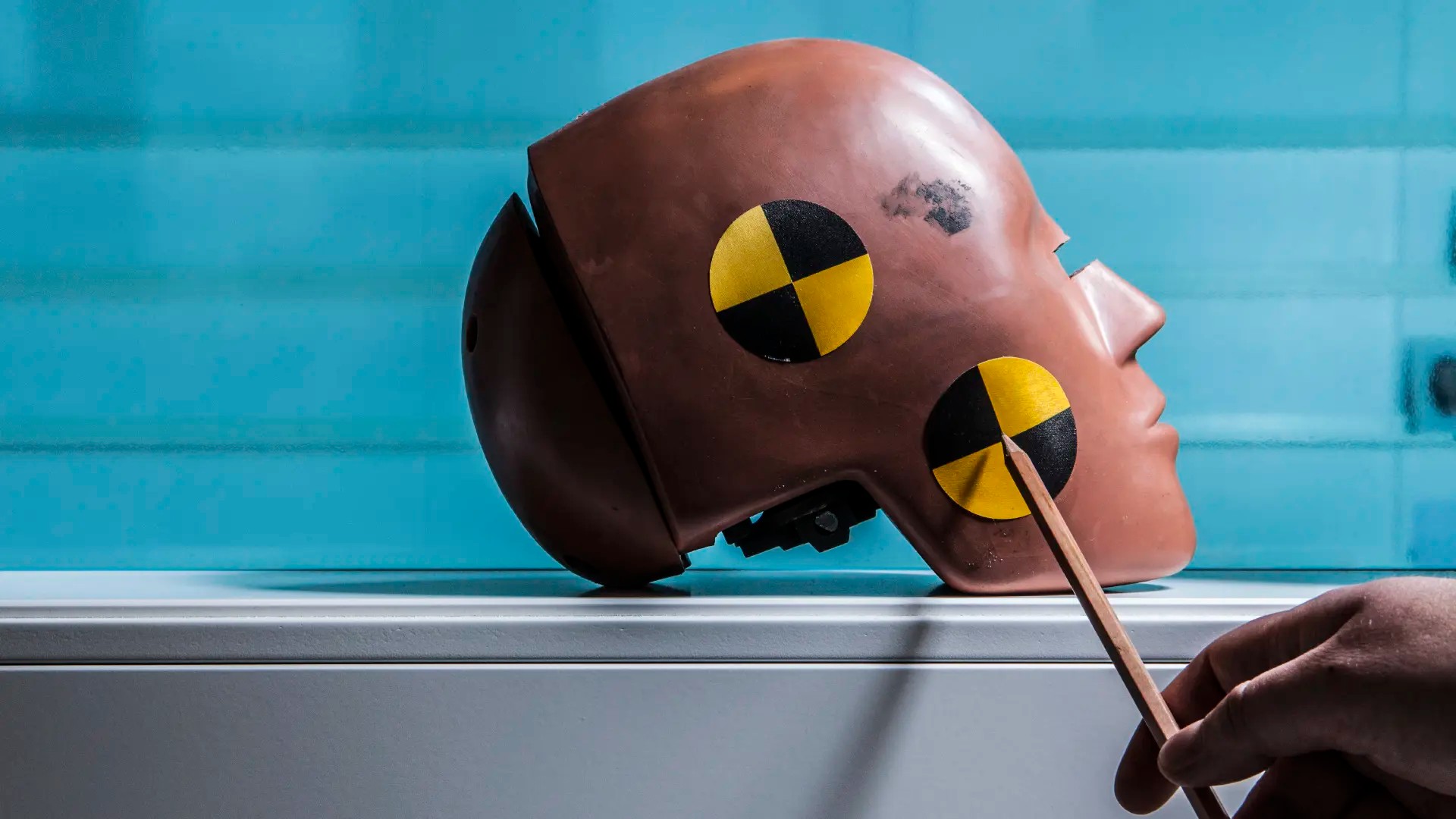
To achieve these goals, we need to develop tools such as crash test dummies and computer‑based models of the human body, so called HBMs. In addition, test methods are needed that in a controlled manner represent the loads to which the human body is exposed in real‑world violent situations. One aim is to define which measurements—for example in a crash test dummy or an HBM—are required to determine whether a countermeasure is sufficiently effective.
We have key roles in the development of two families of HBMs, The SAFER HBM and the VIVA+.
Head of Division Vehicle Safety

- Head of Division, Vehicle Safety, Mechanical Engineering