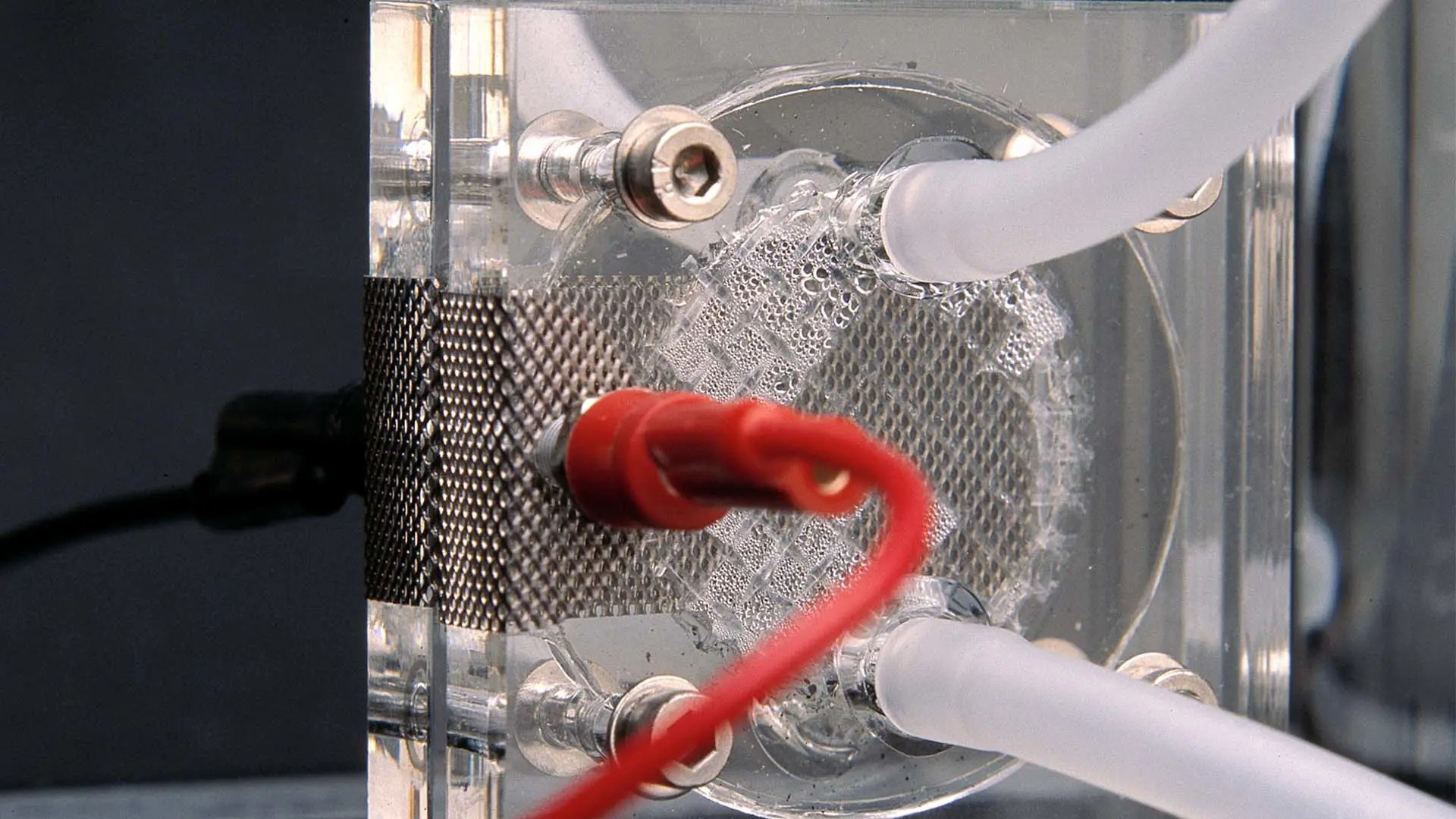
Hydrogen energy is a research area with high priority. Chalmers is working, particularly within the competence centre TechForH2, to develop new technologies for hydrogen propulsion as part of the transition to a fossil-free transport system.
Fuel cell systems
The ambition within the research area of fuel cell systems is to develop predictive system models and measurements to understand the impact of design choices on the performance of a fuel cell vehicle. We conduct research in the area both through simulation and experimentally. The interest in fuel cell systems from the outside world is increasing due to the zero-emissions requirement and the challenge relating to the range of electric trucks. There are also other areas of interest in the field, such as ships and generators that also see benefits from fuel cells. The main research questions concern lifetime, the system on the anode side (hydrogen), the system on the cathode side (air), temperature regulation and dynamics. In these fields we collaborate with Volvo AB, Scania, Johnson Matthey, Powercell, and others.
If you have any questions about the research area of fuel cell systems, please contact David Sedarsky, who leads the work in the research area.
TechForH2
By bringing together multidisciplinary expertise and strong industrial partners, the TechForH2 competence centre serves as a central hub for research in hydrogen energy. The centre drives technological development in areas including fuel cells, lightweight technologies and system integration.
One fifth of the centre is dedicated to fuel cell systems research at ECaPS. Within the framework of TechForH2, collaborations are also conducted with other departments and divisions at Chalmers engaged in fuel cell research at both cell and stack levels.
Visit the centre website:
Contact

- Head of Division, Energy Conversion and Propulsion Systems, Mechanical Engineering