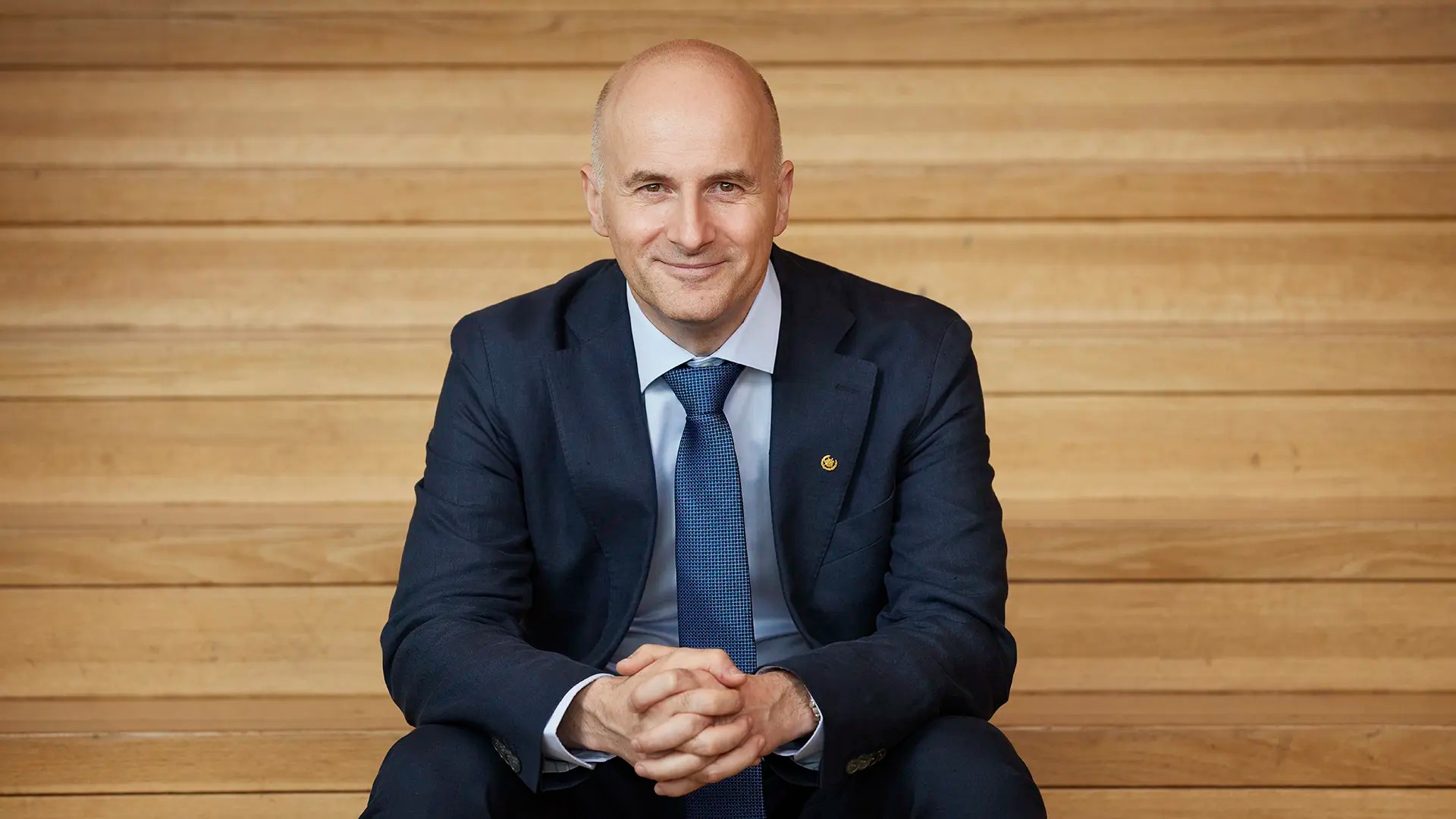
In the early 2040s, Chalmers aims to be a technical university of international top class. A comprehensive transformation is under way – focused on creating even better environments for cutting-edge academic research while at the same time maintaining its strength in engineering education, innovation and collaboration with industry.
At the very top of the international university rankings, Swedish higher education institutions are conspicuously absent. In fact, a number of comparable European universities perform significantly better. Chalmers has decided to make use of its particular conditions in an effort to change this situation.
It is, of course, easy to see the benefits of such a transformation. Engineering nation Sweden has built its prosperity on innovation and exports. Successful universities attract private investment in research and development, which directly affects innovative capacity. In a Europe that also risks losing ground to the dominant centres of the global economy, Asia and North America, the picture becomes even clearer:
“Industry talks about radical competitiveness and the like. I usually say that we are in an existential tech race,” says Chalmers President Martin Nilsson Jacobi. “They are different formulations, but fundamentally a view of our times that we share with many others.”
Technical universities are key players in meeting global challenges. The better the universities, the greater this capacity becomes.
This international technology race is existential in another sense as well, as it concerns our ability to address global challenges. What is required is the systematic building of a capacity for change, a concept to which Martin Nilsson Jacobi repeatedly returns.
“This is not about winning some kind of competition to be the most competitive. Above all, it is about us as human beings taking the major challenges seriously. Solutions must come faster if we are to have any chance of avoiding an environmental catastrophe within a few decades.”
Chalmers and other technical universities are key players in this endeavour. Primarily through education, but also by conducting pioneering research that can be translated both into practical engineering expertise and into innovation, they act as an injection of competitiveness for industry and provide the strength needed to meet society’s global challenges. The better the universities, the greater this capacity becomes.

The challenge: to create more attractive research environments
Here, another aspect of competition comes into play: universities have always competed for the sharpest minds. The institutions with the greatest intellectual appeal have been pilgrimage destinations for talent since the Middle Ages. If Chalmers is to become even better at attracting and retaining the very best, a sober self-assessment is required: we must offer greater resources to those who are to lead research projects – and we must offer a working life that does not involve constant dependence on short-term project funding. Otherwise, too many will seek out other leading European universities. A rational choice: the conditions there are better for conducting ground-breaking research.
It is here – in creating even more attractive research environments – that perhaps the single greatest challenge lies if Chalmers is to reach the top. Engineering education is already of a relatively high standard, and the institution is ranked very highly for its ability to translate research results into innovation in collaboration with industry and other partners.
At an overarching level, there appears to be broad agreement among all key stakeholders regarding the background and needs analysis: politics, academia and industry.
“Everyone agrees that it is necessary, but raising ambitions is also demanding to carry out,” says Martin Nilsson Jacobi.
The practical change process required to reach the goal is no leisurely afternoon sail in a constant tailwind. Priorities must be set and decisions must be made. Attitudes must change – internally at Chalmers, but preferably also within industry and research policy.
The current system is restrictive for institutions that aspire to reach the very highest level
The politically determined system of research funding, in which large resources are distributed on a project basis through public research funders, is something that must be addressed – otherwise it tends to make research short-term (and therefore less likely to be truly transformative) and shifts quality control from the universities to the funding agencies.
“One can understand the driving force behind the system as a way of ensuring basic quality and societal benefit,” says Martin Nilsson Jacobi. “But unfortunately it appears to be restrictive for institutions that aspire to reach the very highest level. At the same time, we see signs that our messages are getting through. The investments in so-called excellence clusters in the most recent research and innovation bill are one such example. It remains to be seen whether these genuinely stimulate universities’ own quality work, and the fact remains that what we primarily need is less project funding and more core funding for research – but it is a step in the right direction.”
In the private sector, this may involve taking an even greater responsibility – including financial responsibility – to enable some Swedish universities to cultivate academic excellence at an even higher level:
“It is a long-term effort, of course, but it is encouraging that so many take this very seriously,” says Martin Nilsson Jacobi. “For example, when the Stena Foundation decided to generously fund what we have chosen to call a William Chalmers Professorship – a position with conditions that can genuinely compete with Europe’s leading universities.”
Read more: Donation from the Stena Foundation Enables Distinguished Professorship at Chalmers

Changes are necessary – but not easy
This new level of professorship is part of a revised career structure that has been launched. It is one example among many far-reaching changes with the same aim: to make conditions for research-leading faculty more competitive. Greater resources combined with higher quality requirements, but also higher expectations regarding academic citizenship and teaching.
A special programme for academic excellence has also been launched, in which participants are allocated enhanced financial resources as well as dedicated administrative support over a five-year period.
To meet the educational mission with a faculty that in future will consist of fewer individuals, Chalmers has also introduced specific faculty teaching positions – a change that has attracted attention.
“But this is certainly not, as some may have perceived it, about separating research from teaching. The primary responsibility for educational content will rest with the research-leading faculty. This is a model that is relatively common internationally.”
That said, it is not easy.
“The changes are, of course, not straightforward. They raise questions, concerns and sometimes resistance – but the alternative, to slowly erode the conditions for academic quality through ever thinner resources and ever greater workloads, would in the long run be far more damaging. The ambition is to create a sustainable academic environment in which fewer people are given real opportunities to take responsibility for research, education and academic leadership at the highest level.”
Research institutes as a limited company is an example of how Chalmers can benefit from its freedom as an independent, foundation-owned university
Another change that has only just begun is the establishment of a new research institute, Chalmers Next Labs, which may become a home base for projects at the interface between research and innovation, often in collaboration with external partners. This is a way of refining and further developing Chalmers’ widely recognised strength in innovation – while at the same time allowing faculty to focus on more purely academic work.
The research institute operates as a limited company, a sister company to the university under the same owning foundation. This is an example of how Chalmers can systematically benefit from its organisational freedom as an independent, foundation-owned university. A coherent future strategy has been developed, built precisely on the opportunities afforded by the foundation model.
“The strategy is a way of doing two things at the same time – things that are not always easy to combine,” says Martin Nilsson Jacobi. “One is to cultivate the possibility of qualified long-term thinking. Slow, if you like. That is characteristic of universities, and it must also include the risk of failure. That is a prerequisite for genuinely exploring the unknown.
“The other is to maintain and further develop our strength as a well-established centre for engineering education and our close collaboration with Swedish industry. Here, the key success factor is rather agility – being responsive to the needs of a changing world.”
These two logics are thus to be combined. When they interact, they serve a higher purpose – they build a capacity for change. By refining the ability to create new knowledge while at the same time translating it into societal benefit, they help ensure that we are better prepared for an unknown future that is approaching us at an ever-increasing pace.
“The capacity for change is among the most important qualities one can have, both as an individual and as an organisation. And the university really is a hub for this. We teach young people knowledge that can be applied in new contexts, we provide continuing education and update skills, and it lies in the very DNA of science to make new discoveries and build new theories and ways of thinking from them. We do not merely optimise existing paradigms, but also create new ones. Universities prepare us all for an unknown future.”